
Why do men always accuse me of cheating?
Why Do Men — Understanding what men do.
See if this sounds familiar…
You come home ten minutes late due to unexpected traffic, or answer a work call with a friendly tone, and immediately meet an interrogation. He glances at your phone, questions your whereabouts, and analyzes your expressions for hidden betrayals. Exhausted by having to constantly defend your innocence, you sit in silence, asking yourself [why do men always accuse me of cheating](/always-accuse-me-of-cheating) when you have done nothing to break trust.
Living under perpetual suspicion erodes your peace of mind and self-confidence. You wonder why do my boyfriends keep suspecting me of infidelity, feeling like no amount of transparency or reassurance will ever be enough. Searching for reasons why every guy I date accuses me of cheating can make you feel like you are caught in a toxic recurring cycle. When you ask what makes male partners constantly accuse me of lying, the exhaustion of constantly proving your loyalty can make you walk on eggshells, altering your normal behavior just to avoid triggering another explosive argument. Recognizing a pattern of boyfriends making false cheating accusations forces you to question whether the issue lies in your communication or in the men you choose.
Unpacking this pattern requires looking at internal projection and masculine insecurity. Asking why do guys always think I am cheating on them reveals that false accusations are rarely driven by your actual behavior. Instead, paranoia is often the outward projection of his own hidden guilt, past betrayal trauma, or profound fear of inadequacy. When a man feels deeply insecure about his value, he anticipates betrayal as an inevitability, constructing accusations to guard against being caught off guard. Recognizing that his jealousy is a mirror of his internal instability allows you to stop defending yourself against false claims and evaluate the health of the connection clearly.
Explore the discussions below to understand the psychology of relationship paranoia, and share your personal experience in our supportive community space.
Would you like some perspectives on this?
Be Part of the Answer
We haven't received any perspectives on this question yet.
You can help by sharing your own perspective, describing what you're going through, or subscribing to be notified when professionals respond.
We respect your privacy. We don't spam, sell, or share your email. You'll only receive notifications about this question, and you can unsubscribe at any time.
Recommended Reading
Books to deepen your understanding of this topic

Not Just Friends
This book explores how workplace and social friendships can gradually cross boundaries into emotional and physical infidelity. It offers crucial insight into how men often drift into emotional intimacy outside marriage without intending to cheat, providing a roadmap for prevention and healing.
Infidelity & Trust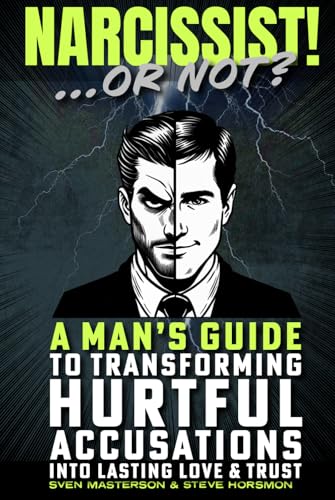
Narcissist! Or Not?
Coaches Sven Masterson and Steve Horsmon help men accused of narcissism move past defensive reactions to understand the underlying fear and emotional reactivity driving their behavior. It offers key insights into male emotional defense mechanisms and practical steps for rebuilding trust and genuine empathy.
Boundaries & Control
The State of Affairs
Renowned relationship expert Esther Perel examines the complex psychology, motives, and cultural shifts behind modern infidelity. The book provides a nuanced look into male desire, vulnerability, and why men cheat even in loving relationships.
Infidelity & TrustThis page is brought to you by the Why Platform — perspectives without algorithms.
Sponsor this content